
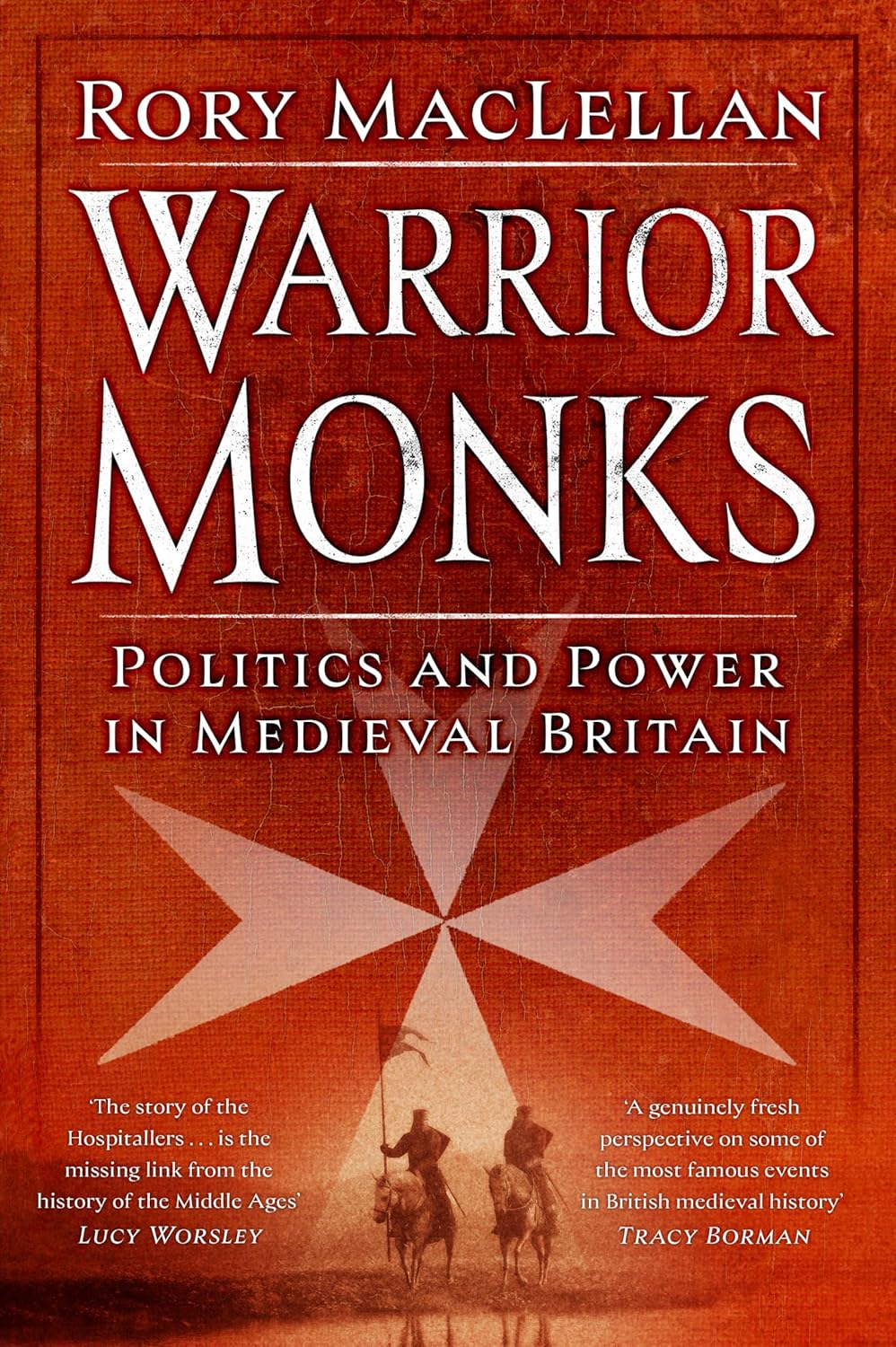
Over the years, I’ve not really read many non-fiction books about medieval history. I tried to read a few when I was a young adult but always gave up on them because I found them far too dry for me to get any enjoyment out of. It’s a shame because it’s not as though I’m not curious about that era of history. Warrior Monks did not have that problem at all though. While it is possible that I might simply have a greater appetite for work like this now that I am a little older, I think a big part of it is that it’s written in a highly engaging way that even manages to capture a little humour – there were two or three times it made me genuinely laugh out loud.
The book covers the history of the Knights Hospitaller in Britain. For those not in the know, the Hospitallers were a Catholic military order and they were active around the world for hundreds of years. Although my own set of morals and values are far removed from those that the Hospitallers adhered to, something that I found quite impressive about this book was how it made me actually feel quite fond of them – and even had me rooting for them a few times. With a history that spans multiple centuries, the book covers a lot of ground and it’s pretty fascinating to see how the order behaved in different ways at different times, and how its influence grew and shrank. I remember feeling a little emotional when reading about how they lost a priory which had been their’s for practically all of their history.
What I enjoyed the most was reading about how they were effected by other historic events which were happening contemporaneously. One chapter dealt with a witchfinder accusing a prominent Hospitaller of witchcraft – it certainly endears you to them when you’re reading about how they’re challenging something as sinister as the witch trials. The absurd claims that were made about them and their associates are also mildly entertaining to look back on (despite the discomfort of knowing that other people lost their lives because of similar accusations). Their involvement with the War of the Roses was also especially interesting to me, along with the hard times they ultimately faced as a consequence of Henry VIII.
One particular strength of the book is that it doesn’t just focus on the big picture. Yes, you do get that as well, but wherever possible, it’s interspersed with human stories and anecdotes. Of course, there aren’t a huge number of these because of how distant the history is, but they make a huge difference and are often some of the most enjoyable bits – the story of the witchfinders is a perfect example of that. Knowing the personal struggles of a lot of the people involves in this history was a big part of what kept me invested throughout. It really breaths life into something which might otherwise feel quite detached from normal human existence.
The ending was great too – I don’t want to “spoil” anything (as much as you can spoil non-fiction history), but it explained the legacy of the Hospitallers that is still felt today. I thought it was an excellent way to illustrate the interconnected nature of things and that even medieval history is relevant to the world we live in today. It was also just quite touching after everything you’ve read about them by that point. If you’ve got any interest in the era, I definitely recommend giving this book a read.
Rating: 8.3/10