
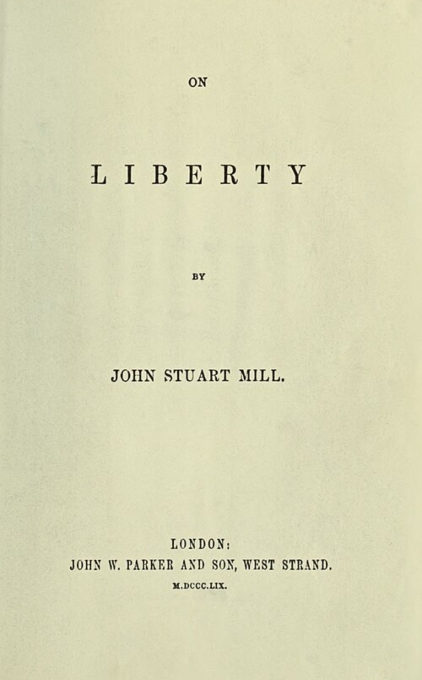
This relatively short philosophical text is great because although it was written in the nineteenth century, it champions both women’s rights and LGBTQ+ acceptance (without even mentioning the latter). The married couple behind it essentially extrapolate the moral values behind a simple notion – if somebody’s not hurting anyone, let them do whatever they want.
Like I said, there is no mention of the LGBTQ+ community, but considering the radical (for the time) beliefs that they held, I don’t think it is at all far fetched to say that they were offering their tacit endorsement. Most likely, they only didn’t mention it because of the controversy something like that would have caused at the time – they’d have been advocating for something that was actively illegal and no doubt would have faced some pretty severe consequences, but their moral framework encourages respect of both same sex couples and trans identities, when you apply it to them.
If you know anything about England in the nineteenth century (and you’ll pick up a lot just through novels, really) you’ll know that it was a society in which people had to be seen to wear the right clothes, say the right things, and behave in a way that was generally agreed to be “proper”. What the authors were suggesting would essentially turn that unhelpful system on its head.
The feminist element is quite important too – and not only because you can apply the moral rules to how women live their lives too. Although it doesn’t focus too heavily on women, when it does talk about them, it’s with the inference that they are just as capable as men and should be afforded all the same rights. It’s not surprising though, since Harriet Taylor Mill was a woman’s rights activist.
I quite enjoyed the section where they talk about religious freedoms as well – naturally, they’re in favour of religious tolerance. It talks about how the most evangelical members of any religion may feel that others are doing harm by spreading the word of different belief systems, but that that fear is essentially cancelled out by the fact that others will think that about them too, and so it is best for everyone to simply accept that they feel differently.
What I also liked was the way that they acknowledged that what is believed to be good and moral in their current age, may well be considered bad in the future – and this is a moral framework that accommodates that. It’s good that they said that, too, because there is a bit at the start where they essentially say that these rules don’t apply when dealing with uncivilised people, and the colonialist element to that has aged awfully, especially when compared to the rest of the text.
If you’re interested in reading more historic philosophy texts, I think this is a good one to start with. Though it’s occasionally a little dry, it’s short and generally quite accessible. I think it also helps that its morals are ones which are just as important today as they were when they were written – divisive politicians seem to be trying to make people hate others for living differently as much as possible, and this is the kind of thing philosophers have been arguing against for centuries.
Rating: 8/10