
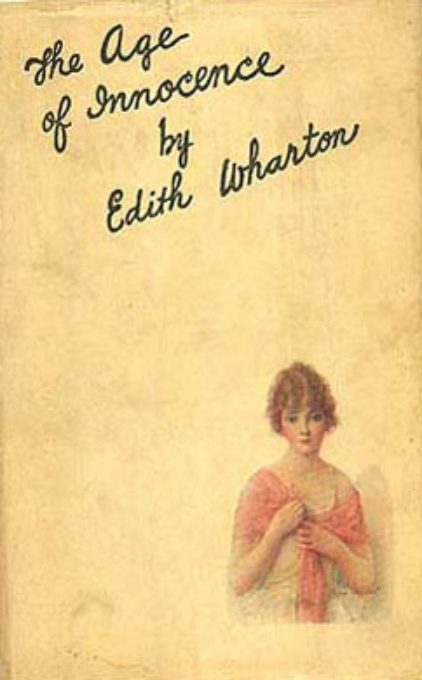
Imagine a slightly more modern and Americanised approach to Jane Austen’s signature style. That’s exactly what Edith Wharton presents in this 1920 novel which focuses on the life in late nineteenth century affluent New York society. There’s a sort of dry, sarcastic humour that runs throughout it, and while that is fairly entertaining, it feels like it’s a little slow to get started. I need some emotional substance to get my hooked on a book, and for the first few chapters, I wasn’t exactly having a bad time or anything, but that just wasn’t there, so I wasn’t especially engaged.
But as it went on, I realised that it did indeed have quite a big heart to it – and that heart comes from Ellen Olenska. She’s a woman who is living apart from his husband and who moved to New York in the hopes that she would be accepted within progressive society. Sadly, that’s not the case, and despite her kind and earnest nature, she faces a lot of judgement from those who live there, especially those in her extended family.
The other most prominent character in the book is Newland Archer, who is the narrator. He’s engaged to May Wellend, a relation of Ellen’s, and so he gets to hear all the unpleasant family gossip about her, and is actually encouraged to try and make her change her mind. What happens is that Newland actually becomes quite good friends with her.
The problem with Newland is that he’s such a weak character. I don’t mean to suggest that he is ill-defined or poorly written – I mean that he hears people bad-mouthing Ellen and thinks to himself “gee, that was kind of harsh” but then almost never actually speaks up for her. Of course, there are loads of people who are afraid to speak out for the greater good because their opinions are “controversial” and his failure to stick up for her generally made me feel fonder of Ellen – which was no doubt the author’s intention.
I won’t spoil the ultimate path of the novel (I was both surprised and lightly disappointed by what happened) but the further I went, the more invested I became. It’s nice to read a relatively early novel which portrays a woman seeking a divorce in a sympathetic light, because even though it was set 50 years before it was written, it was still taboo in 1920. In general, it reads as kind of critique of marriage, and the way in which people resign themselves to a life of unhappiness with people they have either ceased to love, or never loved in the first place. While the opening chapters were laced with dry humour, it was quite sombre by the very end, and I appreciated the journey I’d been on with all the characters.
Rating: 7.9/10