
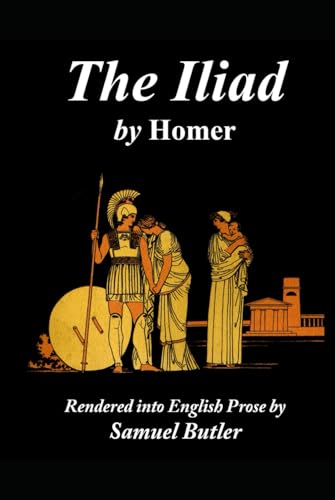
The Iliad is one of those cornerstone pieces of literature which has influenced cultures and people’s perspectives on Greek mythology for thousands of years. As an avid read of pretty much everything, it was only a matter of time before I got around to reading it. In some ways, I loved it. In some ways, I hated it. It’s a tough read (one that’s possibly easier with different translations) but one which I’m glad I got through.
Let’s talk about the negatives first, because then I can end on a positive note. The Iliad is all about the Trojan War and so there’s a lot of very dry descriptions of battles. You get long lists of all the combatants and then you get long lists of everybody who died and who it was that killed them and who they killed. Something in particular that I noticed that a lot of people are described as being killed by getting stabbed ‘right next to the nipple’ which seemed odd the first time it was mentioned, but when it happens again and again it seems downright bizarre (comically so). Perhaps this made more sense in its historic context.
Anyway, the point is that most of the book is made of up these descriptions of battles. There’s other more fun and more meaningful stuff in there too, but I’d say this is about two thirds of it. For me, it was a chore at times, but it wasn’t too bad – I’ve read much drier things before (I’m looking at the Bible), though if you’re someone who has never read any ancient literature before, I’m not sure if I would recommend this as the place to start as you’ll probably end up giving up on it. I read through with a friend, which made it a little more fun, so that could be an idea, if you’re unsure.
So aside from that negative (which is pretty big), over time I came to find the descriptions of the battles kind of profound. Yes, it feels boring reading long lists of names and who they’re related to and so forth, but it does also get across that every person who died on the battlefield was an individual with life and a role in their community. One person in particular is described as being a rich man who liked to arrange social gatherings and was very popular. You don’t know much about him, but just getting that little bit, and then knowing he was killed on the battlefield is quite sad. It feels even sadder in the instances when it gives a lot of gory details, like telling you their entrails spilled out all over the floor. Although The Illiad was, for sure, a fanciful work that includes a lot of supernatural elements, if there was indeed a Trojan War (and there may have been) then these could be real stories of the people that were lost. In that way, it serves to highlight the brutality of war.
Speaking of long lists of names, there are a lot of iconic figures from Greek mythology in The Iliad. Admittedly, they don’t all have huge roles, but I got a certain thrill out of reading something that featured so many legendary characters. Even if a lot of it is battle after battle, it kind of made me thing of a Marvel Cinematic Universe movie – the plot may be a bit weak, but it’s cool to see so many of these beloved characters in action. A lot of these characters were ones I’d never run into before as well. For example, Eileithyia, the Goddess of Childbirth, is someone I’d never heard of before, and she doesn’t really do that much in The Iliad, but I was fascinated by the idea of her and I’ll definitely be reading more about her. There were lots of little moments like this. Like diamonds in the reading mines.
Something I was surprised is not here is the Trojan Horse. I’ve enjoyed that story since I was in school and I was kind of looking forward to seeing it here – so I thought I’d better mention to save anyone having that same disappointment! On the flipside, I was pleasantly surprised by the amount of humour in The Iliad (which may come as a surprise after what I’ve said before), but the way that nobody (including the gods themselves quite often) seems to have any level of emotional control over themselves certainly elicited a few smirks and laughs from me. They’re always giving off hugely impassioned speeches about everything and ready to kill or die for their cause. To use a modern expression – they have no chill. I suppose the fact that the years of war were all caused by jealousy over the love of a woman (Helen of Troy) says it all.
So that’s The Iliad. If you love Greek mythology, then I think you’ll probably like this. If you’ve always wanted to learn more about the Trojan War, then you’ll definitely like this (even though it’s by know means a reliable historic record). I certainly enjoyed it for those reasons. I just can’t emphasise enough that it’s still going to feel like a bit of a slog, no matter how interesting a lot of its features may be.
Rating: 6.4/10