
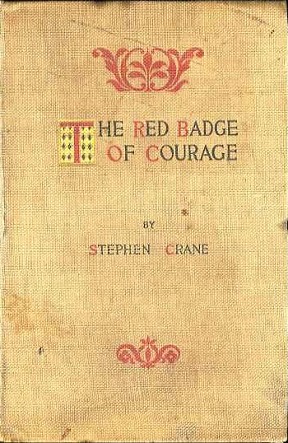
To this day, there are those who glorify war and make it out to be some noble, adventurous experience. Luckily, there have always been people like Stephen Crane who have worked to highlight just how brutal and harrowing war can be… so it’s kind of ironic that he wrote this without any first-hand experience of it himself.
Nonetheless, Crane’s story about young Henry Fleming’s experience in the American Civil War stands out for how realistic it feels (and I say that as someone who, thank goodness, also has any first-hand experience of war). There’s no obvious story structure, but I think that fits well with the idea that this book captures a realistic snapshot of a battle. With Henry himself, there’s a sort of emotional journey because after he runs away from the enemy near the start, he’s riddled with guilt and considers himself a coward.
Crane does an excellent job of highlighting that Henry’s “cowardice” is no moral failing though. There’s a lot of detail about the horrible conditions that the soldiers experience, and gruesome descriptions of injuries and fatalities on the battlefield. There’s one scene in particular where Henry discovers the body of a soldier who was obviously killed some time ago and forgotten which I found deeply haunting. He describes it with a sort of perverse serenity and it was disturbing in a way I’d never really found other things before.
On top of that, there’s also the fact that a lot of people die. You get to like the side characters and though they don’t get enormous amounts of development, you feel for them in the same way that Henry does and when they die, it’s not nice. Admittedly, one of the few things I didn’t like about this book was the way that the characters’ accents were written phonetically. It occasionally made things hard to understand and, from my perspective, it damaged the tone a little, as fictional characters always feel silly to me when I read their accents like that – hearing accents is not a problem, but when written, they feel like exaggerations. An unintended benefit of this though is that it gives you a bit of emotional whiplash when the horrors of war start, making them land even harder.
For some people, this might just be too horrible to read – it is pretty grim. I guess the ending wasn’t as bleak as I thought it might be though. If you’re interested in the American Civil War, anti-war literature, or literary classics in general, it’s well worth a read. It’s not long, so you’ll easily finish it quite quickly and the writing style is generally accessible (phonetic accents notwithstanding).
Rating: 8.7/10