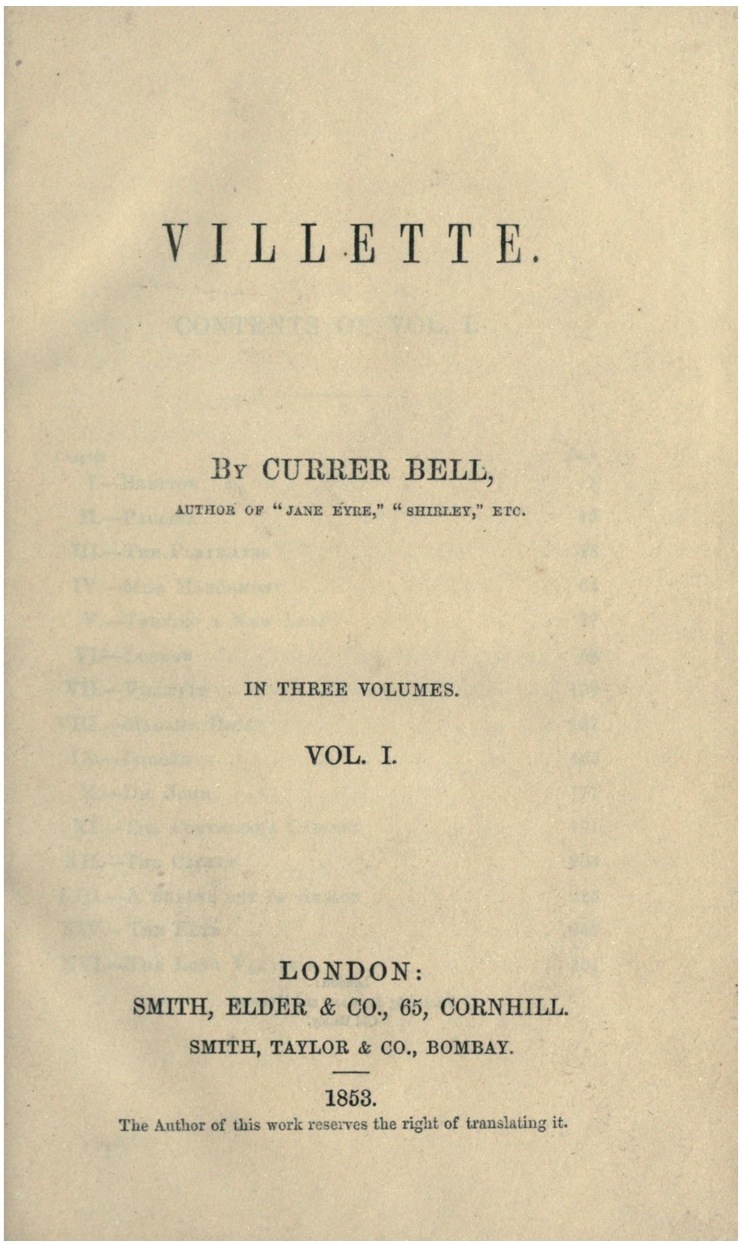
Vilette was the final novel by Charlotte Brontë and it tells the story of a woman named Lucy Snowe who travels to the town of Vilette (in the fictional French-speaking country of Labassecour). It’s an interesting story, because I never had any idea of where the storyline was going to go next as it jumped around semi-eratically, and among its moderately-sized cast of characters, Lucy herself (who is also the narrator) was one of the least likeable.
At the very start, Lucy goes to stay with family members in the English town of Bretton. Here you get a feel for the home she stays in and all of the characters in her life – I quite quickly became endeared to a little girl called Polly who lives among them and is strong-willed and opinionated. It’s a fairly cosy set-up and the writing style had me deeply invested in everything… and then Lucy leaves them all. It’s quite jarring, and left me with a feeling of, “Gosh, well, what was the point of all that then?” (Though the point did later become clear.)
Before you know it, you’re onto the next segment of the story – Lucy out making her way in the world. One scene in particular stuck with me: Lucy’s first visit to London. It’s quite a beautiful scene, really, and she is awed by the majesty of the city and I thought it was wonderfully timeless, because I very much remember having a similar experience when I visited that place for the first time.
I won’t spoil too much of what happens, but as I have already alluded to, she eventually moves to Villette and, once there, she becomes an English teacher. Although it takes a while to get there, this is where I’d say the bulk of the action takes place. There are characters like Lucy’s boss, Madame Beck, a shifty but entertaining woman who loves to meddle and spy. There’s also her colleague, M. Paul who just comes across as quite a horrible man who thinks he is superior to Lucy (and is probably one the only people I thought was worse), and her young friend, Ginerva, who Lucy thinks she is superior to and spends a lot of time reminding her of that fact.
That’s Lucy’s problem – she spends the whole novel looking at everyone from a detached perspective, convinced of her moral superiority over them, judging everything everyone else says or does, never really having any fun or bonding with people – and even when she does bond, it’s bonding mixed with judging. Sometimes I thought to myself, “Gosh, Charlotte Brontë just wanted to create a fictional mouthpiece to complain about everything she hates in the world” but ultimately, without spoiling anything, Lucy is quite a tragic character, because most of the people in her life are quite happy and fulfilled, and she just observes them from the detached perspective of someone looking down on them.
There’s a lot of anti-Catholicism sentiment in this book, which just feels a bit hateful at times and, to be honest, there are long stretches when not a lot happens. It’s a bit of a mixed bag of a book, but it is wonderfully written, even during slower chapters. One line that particularly resonated with me was Lucy saying, in response to being told to cultivate happiness, that “happiness is not a potato” which I thought was delightful. Looking back, it’s quite significant, because happiness can be cultivated in life, but it’s not any easy thing to know how to do, so the instruction alone is quite worthless (and her flippant retort appropriate). If she had known, she’d have been much better off.
It’s not my favourite Brontë novel by any means (I think it probably only beats out The Professor for me), so I wouldn’t recommend it for anyone who hasn’t tried any of the sisters’ other novels. But if you’ve liked other ones, you’ll probably like this one too – it’s just a little drier than some of the more popular ones.
Rating: 7.5/10