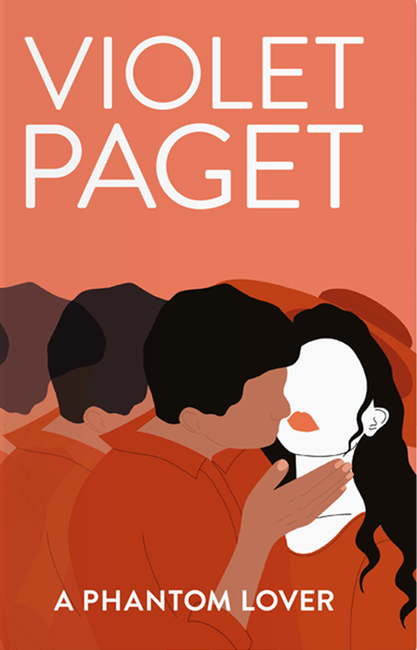
This was another of the books included as part of the Reclaim Her Name project, which republished a collection of works by women authors who had had to use a penname because of negative attitudes towards women, but now puts the author’s real name on their work. Originally, A Phantom Lover was published under the name Vernon Lee.
Though it’s actually fairly short in length, that doesn’t stop it from being a really delightful gothic novel. It’s told in the first person by a portrait artist who has been invited to the Okehurst estate in order to paint a woman named Alice Oke, who lives there with her husband, William Oke. The artist becomes really quite obsessed with Alice, because he finds her to be intoxicatingly beautiful in a rather unconventional way. But his fascination with Alice soon evolves beyond an interest in her appearance, as she reveals herself to be a very aloof, enigmatic and mysterious woman who is practically obsessed with the actions of one her long-distant ancestors. Strangely, she also looks identical to the painting of a lady from her family’s past too. Soon it becomes clear that there are serious problems in their relationship – the artist even stays longer than necessary just to observe then with a kind of morbid curiosity.
The three main characters are all very well developed, from the curious (yet detached) artist, to the melancholy Alice whose head is in the past and William, a fairly silly man who takes himself too seriously. Their lives are then set against the backdrop of Okehurst – a very vivid setting which really helps to bring the story to life, you can really see the creepy old estate. It’s such an enjoyable tale, that I am surprised it’s fallen into relative obscurity. I really enjoyed it and hope that more people will have the opportunity to discover it soon. There’s so much mystery and intrigue throughout the story and you’ll find yourself wondering what’s actually going on – most likely, you won’t guess and the ending will catch off guard, because that’s what happened with me and I found the whole experience very enjoyable.
I don’t think that life amidst the pandemic has been particularly hard for me. Yes, I may have been made redundant because of it, ended up getting seriously ill in the middle of it, then contracted COVID-19 this year and almost died from it – but mentally, I’ve been fine. I’ll admit that, in the very early days, I found myself feeling a a bit lonely from time to time, but it was never that bad since I live with a good friend. I mostly just saw it as an opportunity to read more, to play more video games, to write more fiction and to catch up on the endless TV shows and movies I want to watch on Disney + and Netflix. So that’s what’s what I did and I was quite pleased with the amount of personal projects I managed to get started/complete.
My pandemic life is very different to my pre-pandemic life – I used to visit friends all the time and take lots of long walks. Now, as a consequence of getting quite ill, I’m not strong enough to have long walks and, of course, for the my own safety and theirs, I’ve seen very few friends. I’ve not really thought much about the change though, and instead had more of a “right, this is what life is now then” sort of attitude, enjoying the things I have been able to do. Plus, of course, it was nice not to have everywhere be so crowded and it was nice not to have to commute into work.
While I am still quite strongly incapacitated, over the past few weeks, I have actually gone out and done a small few things. It’s been really nice to see people again and have nice long conversations with them and, frankly, it’s been good to get out of the house (even though I love my house). Just this evening I went outside for a short walk (I still can’t go far) and I was thinking about how nice it had been to go out and I realised how much I’d missed it. It’s like I’d forgotten how good life can be, because I’ve not thought about how good it is to go out and see people in a long time and now I’ve done it again, it’s brought it back to me. It was a little chilly on my walk today and as I was out on the streets, I thought about all the times I’d headed out in the dark to go and make visits to people and have fun nights out – it made me excited to do that again soon. I know it’s not going to ‘back to normal’ any time soon, with the pandemic raging on despite a lack of any safety measures, but I’m soon to have my vaccination and I know lots of other people have had theirs and I am excited to do at least a small portion of the activities I used to do.
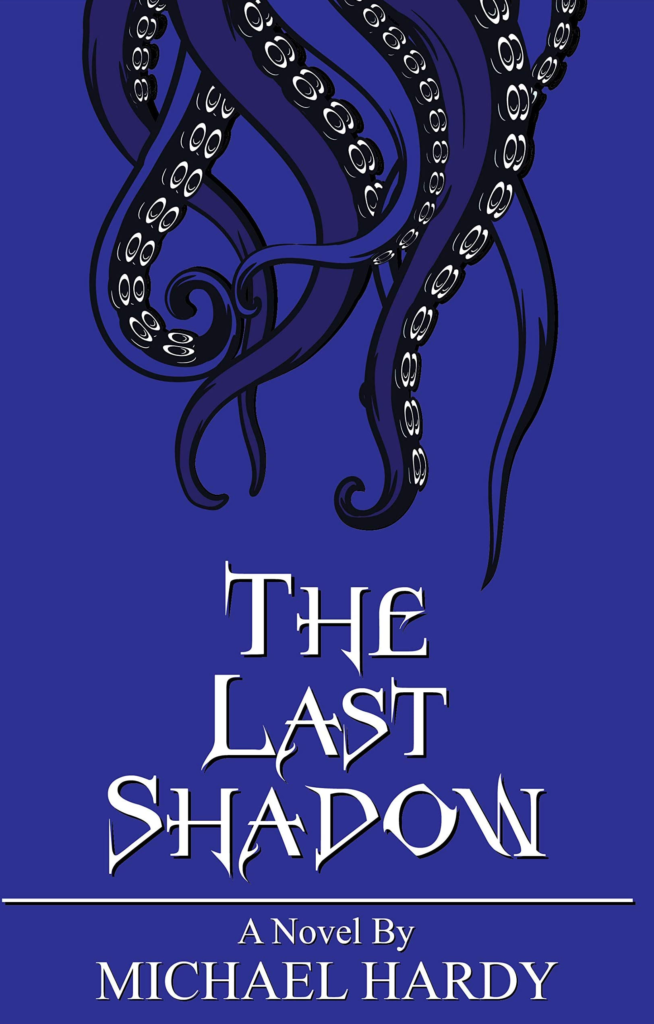
Like many books that I read, I went into The Last Shadow without knowing anything about it. Literally nothing – I’d never even heard of it before, but the author requested that I review it for a free copy, and who am I to turn down a free book? As it turns out, I was very fortunate to be offered it, as it was an enjoyable novel which I’d never have read otherwise.
The story primarily revolves around two girls: Nadia and Kris, who both so happen to find themselves at the abandoned Bright Pool Amusement Park. As I’m sure you can tell, this is a horror novel, because what other genre ever uses an abandoned amusement park as a setting? Soon they encounter Alfredo the Ringmaster, an evil entity lurking in the shadows and find themselves coming up against all kind of evil creatures.
It’s a very vivid story, which paints a very colourful picture in your mind. I could quite easily imagine this as a horror movie that came out in the 80s. It’s got just the right mixture of extreme gore and violence, mixed together with just a bit of self-aware humour that can joke about how over the top some of the things which happen are. Sometimes it feels quite fun and campy, but that is then contrasted against the fact that the things which are happening to the characters are genuinely very harrowing.
As the story goes on, you also get to find out how about the lives which lead Kris and Nadia to this point and I liked that the complete backstory had been fully planned out for each character as it’s not something that always happens in this kind of genre. The only thing that’s a bit of a shame is that the end of the novel doesn’t really feel like the end of the story: it’s like its the end of a first episode in a TV series about the adventures of Nadia and Kris – but, then, if the author is planning a series of novels, then that may well have been intentional.
Aside from that, I did think that there was occasionally a sentence or two which sounded a bit strange. It wasn’t hugely problematic, but it kind of interrupted the flow of the story and would take me out of things from time to time. I’m not a literary snob, so it didn’t really bother me a huge amount, but I can imagine it being slightly more annoying for some people.
Overall though, this was a fun read. The whole book played out like a movie in my head, which isn’t something I can say of every book I’ve read and I found myself really enjoying the dialogue between the two main characters as it was often quite snarky or jokey, which made them both quite endearing. I also never would have guessed one of the twists which is revealed towards the end of the book, so that was a nice surprise. If that sounds like something up your street, I definitely think it’s worth a try. Fans of horror movies and vampire fiction will probably get a lot out of this.
The Donkey Kong Country games are some of the best games on the SNES and they’re also some of the best games on the Game Boy Advance. Some fans aren’t so fond of the GBA versions of the games, but I grew up with the originals and can appreciate the GBA games for what they are: alternative takes on the classic formula which offer a unique and distinctive experience. This is especially true of Donkey Kong Country 3, which has more changes than any of the others. Do read my review of the original version, by the way, as I’m mostly going to be talking about the changes here, rather than the basic components of the game.
One of the best parts of the series, in my opinion, is the fact that it has an exceptional soundtrack. The GBA was inferior to the SNES when it came to sound and with the first two remakes, it was noticeable that the music was primarily watered down versions of the tracks you heard in the original. Not so this time: David Wise actually composed a completely new soundtrack for the whole game. I adore the original soundtrack, but I love that this gave us some new music. It all sounded great to me, on the level that you’d expect from a Donkey Kong Country game, so it’s wonderful to have so much new music.
However, it’s not just the music that’s been changed – all the sound effects are different too and most of then I don’t like. In fact, some of them are quite weird choices. For example, K. Rool’s voice clips are recycled voice clips from Chunky Kong. Some of it just doesn’t work. Some of it, though, is fine. Also, though I like the music, I did sometimes questions the decisions about how and when it’s used – it doesn’t always match the music or the scene it’s in.
The gameplay, meanwhile, is just as good as it ever was – quality 2D platforming and you know what’s even better? There’s now a new boss fight and a whole new world full of levels! They’re really fun and creative levels too, which give you something different to what you’ll find in the original game: my favourite example is that there is a level which features a sunken forest. Very cool stuff indeed.
Outside of that, there are some new mini-games. Funky Kong now hosts a game which is a homage to Rare’s old game, Cobra Triangle. That mini-game even features a cameo from Chunky Kong, making it his second and, so far, final appearance in anything. Swanky Kong now hosts a weird game that has Dixie running down a three dimensional tunnel – it’s not really that fun and, sadly, it replaces the target game Swanky used to host. Cranky Kong also has a comical game where he dresses as a ninja and deflects hedgehog enemies. It’s a fun, if inconsequential, little addition.
All in all, I love it. When it first came out, I was delighted to have the game available to play on the go… now you can play the original on the go, but there’s enough original content in this one that it’s still worth coming back to. I strongly recommend it.
The other day, I was watching randomly recommended YouTube videos to pass the time. One that I came across included a person who’s perspectives I’m not very fond of. To keep the tone of this blog post neutral, I’m not going to say who they were or what they were talking about. Anyway, in this short clip which was only a few minutes long, I felt that this person came across pretty badly. They seemed defensive, their points weren’t made very well (and, of course, I didn’t agree with those points). I thought to myself “Gee, this clip certain shows them in a bad light.”
Then I decided to look at the comment section. To my surprise, people were overwhelmingly saying that they thought this person had come across really well and that they’d eloquently made their points, while making the people they were discussing things with look like idiots. In fact, one person said that it was as if they were the only intelligent person on the panel. For reference, there were four people involved in this discussion and each of then were arguing from different perspectives.
For me, it was very interesting to me that different people had perceived the exact same clip in a completely different way. It’s an interesting reminder of a fact that a person’s values and beliefs will play a huge part in how well any individual comes across. What may look bumbling and incompetent to some, will be refreshingly down to Earth to somebody else. Defensiveness will be seen as righteousness. Moral compassion, as high-horsedness. Our biases will always play an unavoidable role when we perceive somebody talking on any point.
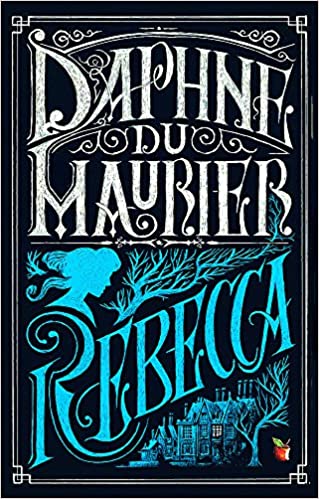
I always enjoy good gothic novels, so to some extent, it’s no surprise that I was very fond of Rebecca. Predominantly set at Manderley, a large estate in a quiet area not far from the ocean, the book explores anxiety, misogyny, abusive relationships and has a great sense of mystery throughout.
The main character, who we never learn the name of, ends up marrying an enigmatic widower named Maxim de Winter after a whirlwind romance and comes to live with him at Manderley. Our protagonist is also our narrator and throughout the story we get a good look into her mental state – she’s forever comparing herself to Maxim’s first wife, Rebecca, and has a perpetual feeling of inadequacy. She’s a young, naïve woman who’s only around twenty years old – she interprets every little thing that people do as a response to perceived failures on her part. To some extent, her behaviour can occasionally be annoying – but that is just a testament to its realism. When people are as crippled by anxiety as the protagonist, it would seem annoying to hear them thinking everything is about them – and, indeed, it’s probably annoying to live to have your mind working in that way too!
Things aren’t made any easier by Mrs Danvers, one of the housekeepers at Manderley. Mrs Danvers was exceptionally fond of Rebecca and the two of them had a very close relationship – she openly compares the protagonist and Rebecca and wants to make her feel inferior. At first, she just seems to be a generally spiteful and malicious person, but as it goes on, you learn more about things that happened in her past and my view of her certainly softened as time went by.
And that’s one of the real strength of this novel: every character in the book is extremely flawed in some way: the protagonist, Mrs Danvers, Maxim and even Rebecca herself – yet they also all seem very real and their motives and reasons for behaving the way they do are easy to understand. While every character had at least one moment where I thought they came across very badly, every character also had a moment where I felt fondness (or at least sympathy) towards them as well – they were all good, well-rounded characters.
You’ll notice that I mentioned Rebecca herself among the flawed characters, despite the fact that she is dead when the novel begins. While she never actually appears in the present tense (and we also don’t get any flashbacks of her), we hear enough about her from all the other characters that she has just as much of a presence as anyone else. In fact, really, everything that happens in the novel is directly influence by her, even though she’s dead – it’s an interesting way of highlighting somebody’s legacy.
I think that a cast of well developed characters is enough to make an novel worth reading (side note: Maxim’s sister Beatrice is a very likeable character – she comes across as a very ‘loud’ but well-meaning person), but the fact that it has a mystery/thriller element as well only serves to make it even more of a page turner. I know some people think it’s a bit slow to start (I didn’t really think that), but other than that, there’s not much to fault this novel on.
They say that whatever doesn’t kill you makes you stronger, but I had COVID-19 and multiple pulmonary emboli and while none of this actually killed me, I have to say I feel significantly weaker after the experience.
I’m writing this blog post just after having done my dishes and emptying the recycling bins – small tasks which I wouldn’t have thought anything of a few months ago, but today they’ve really tired me out. I feel like I should go and have a quick nap – though I’m trying to cut down on my middle of the day naps! Now that I have “long COVID” just about everything tires me out. Plus, my chest is in perpetual pain – often pretty badly. I’ve returned to work, but I do one day a week from home and even that feels like too much sometimes.
I find myself thinking about the past a lot lately. I used to go on long walks in the countryside with friends and be the one who could keep going when everyone else was tired out. I used to leave it as late as possible to go and get the bus or train home after visiting friends and then end up running huge distances to make sure I didn’t miss them. I used to hop on the bus at the last minute to go and visit friends who were sad and needed cheering up. At one point in time, I was running about 5 kilometres (at least) three times a week. There were times when I’d literally go and visit different friends after work every weekday. I’d always be planning and arranging new outings. I had such an abundance of energy and now, sometimes just having a shower is enough to make me tired out.
Occasionally, I’ll have five or ten minutes where I’ll feel frustrated and wish that I had all my old strength back. Thankfully, however, these periods don’t last long. One definite positive throughout the whole experience, is that I’ve found myself able to stay in high spirits for the majority of the time – and that’s probably because I’ve been very lucky. Or, at least, I’ve been lucky in my unluckiness. I’m still alive, for one thing – but, that aside, I live with an incredibly kind and supportive friend who does more for me than I’d ever expect or ask for and the outpouring of support from all of the other people in my life has been almost overwhelming. Cards and gifts in the mail, tonnes of heartfelt messages online. Even if I’ve not seen them, I’ve certainly felt their influence.
Often, when someone is sad, the cliched response will be “at least you’ve got your health” and, by all means, your health is something very valuable. However, as somebody who doesn’t “have their health”, I think the most important thing is to have kind and loving people in your life. With those things, I don’t think I can ever be too sad. So while I slowly wait for my lungs to hopefully return to normal, I can take solace in the fact that I am loved by the wonderful people I choose to have in my life.
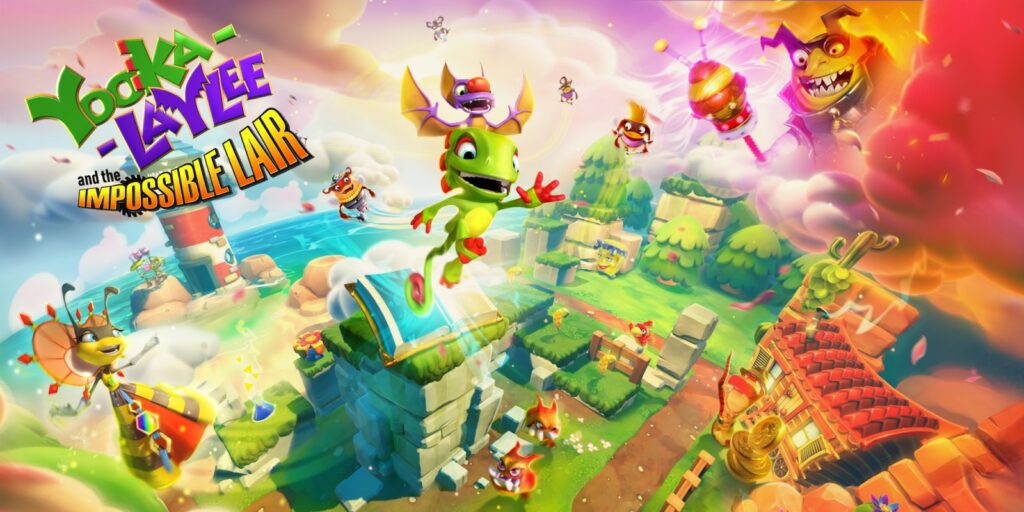
The first Yooka-Laylee game was incredible and soon became one of my all-time favourites. When I found out that its sequel would be a 2D platformer, rather than a 3D platformer like its predecessor, I was a bit disappointed. I was still going to get it as soon as it came out, but I thought it might be a step down from the first game due to the change in formula.
As it turns out, I had absolutely nothing to worry about. Yooka-Laylee and the Impossible Lair is just as good as the first game and, depending on my mood, I sometimes think that it might actually be even better. Like the first game, it is now one of my favourite games.
There are two sides to the game: the first is the 2D platforming. Every level is beautifully designed and has just the right balance between being fun and being challenging. There are tonnes of beautiful environments (forests, airs ships, cliff sides, towns, factories and more) which look really nice and are full of nice little details – then each level also has an alternative form. For example, a level with a lot of water in it might change so that all the water is completely frozen and you don’t swim in it anymore, one level in a factory gets completely flooded, one level even gets rotated by 90 degrees, which changes everything. It’s always fun to play a level again in a new way and this is a fun new mechanic that I’ve not seen in other games.
The other side of the game is the world map, which isn’t just a map, but more like it’s own game. Building on top of the more interactive map from Donkey Kong Country 3, you walk around in a 3D overworld with a kind of top-down perspective. To me, it felt a little similar to the 2D Zelda games, except that it was pretty much better than all of them. You walk between different Grand Tomes (which are the entrances to new levels) which are scattered around the overworld and you have to find ways to do things to the Grand Tomes so that you can unlock the alternative versions of them. Sometimes its as simple as waiting for the tide to come in and spill over it, other times its very convoluted, like a particular instance where you have to make a frog start fishing inside the Grand Tome. The overworld is, honestly, just as nice to explore as many of the 2D levels – with deep forests, beautiful beaches, dark castles and more. There’s even an NPC who tells you that there’s a really well hidden secret somewhere in the world and, to my knowledge, nobody has ever fond it. How exciting. In order to progress in the overworld, you need coins which you can collect in the 2D levels.
Now, as you can probably tell from the title, there’s a really hard level called “The Impossible Lair” and this is something you can actually access right from the start. The idea is that for each of the 2D levels you win, that’s an extra hit you can take in The Impossible Lair. As someone who has been playing 2D platformers for my entire life, I arrogantly believed that I wouldn’t have too much of a hard time with this – but let me tell you, this is a very, very tough level, even if you have loads of hits you can take. Frankly, I almost gave up on it, but I was able to persevere because I love Yooka-Laylee so much. I’ve seen a lot of people who got very angry over the difficulty of The Impossible Lair… but, to me, it seems like the whole point was that it was supposed to be really hard? And after a lot of tries, it is manageable. Though there’s an extra reward for doing it without any extra hit points, which I can’t imagine myself doing any time soon.
The real icing on the cake for this game though, is that its absolutely charming. Dialogue with characters on the overworld is hilarious and there’s a nice mixture of new and old characters (though I wish Clara Lost were in it). There are tonnes of references to games like Donkey Kong Country (some of them pretty overt) and you can find and purchases lots of fun different Tonics which alter gameplay in different ways – sometimes making things easier, sometimes making things harder and sometimes just changing how things look. On top of that, it has just about one of the best soundtracks I’ve ever heard for a game – it’s one of those ones where you’ll stay in a certain spot in a game just to hear the music.
So if you love Donkey Kong Country, Banjo-Kazooie, the first Yooka-Laylee or just 2D platformers in general, I heavily recommend this game. It really is something special.
Recently, I’ve seen a lot of people sharing a petition around which aims to make it mandatory for people using any kind of social media to submit some kind of ID. Otherwise, they’d presumably either not be allowed to make a account, or would be kicked off if they already have one. The thought process behind this is that it will mean that anonymous internet bullies will now be held accountable if their behaviour veers into criminal territory. For example, people discussing planned terrorist attacks, people inciting racial hatred, people releasing others’ personal information, people relentlessly harassing individuals, people using accounts to groom children/teenagers and so on. There are a lot of disgusting things that people do when they have an anonymous social media account.
However, is making it mandatory to submit ID really the best way to go? Would anyone be able to go onto your account and see who you are? The petition doesn’t really make this clear, but let’s imagine for the sake of argument that it would be like this. Here are a few scenarios to consider: someone is in a really violent relationship and uses social media to anonymously vent about the partner they are unable to leave – with mandatory ID, the information about who they are could get back to the violent partner and endanger their life. Imagine someone who is non-heterosexual lives with highly religious parents who would toss them onto the streets if they knew about their sexuality – maybe they go online to connect with the broader LGBT community in a way their abusive parents cannot monitor, but with mandatory ID, it might get back to them and they could end up homeless. Imagine somebody who’s stuck in a job that they hate and in which they are routinely abused by their employer – it may be therapeutic for them to complain about it discreetly online, but with mandatory ID, they could end up losing their job. The introduction of mandatory ID for social media would then create problems for thousands of people in situations like this.
But what if the ID is submitted to the platform and not publicly visible and then it only comes up if the user does anything criminal? Does that solve the problem? Well, I don’t think so. If you are under 18, the petition says that you should use your parents ID, so the LGBT kids living with abusive religious parents (as mentioned above) would then need to ask their parents for the ID and make them aware of their account, or just lose the friends and community they’ve cultivated. Also, not everyone has a form of ID: poor people who don’t drive or have a passport would have to submit a birth certificate, if they have access to it, or otherwise lose access to one of the biggest communication platforms in our society. Also, thinking long term, what if you had submitted your form of ID to social media and then the law changed for the worst – all of a sudden, public criticism of the government is illegal and the ID attached to your account can be easily silenced. I’m not saying that this is something that’s going to happen any time soon, but if you have a precedent for mandatory ID on social media, this is a problem that could arise further down the line.
So as much as I completely agree that there are awful things done over social media and the people who are doing them need to be held accountable, I also think that it poses too much of a risk to the vulnerable people who are already using the platform and so I think that there needs to be a different approach to solving this problem.
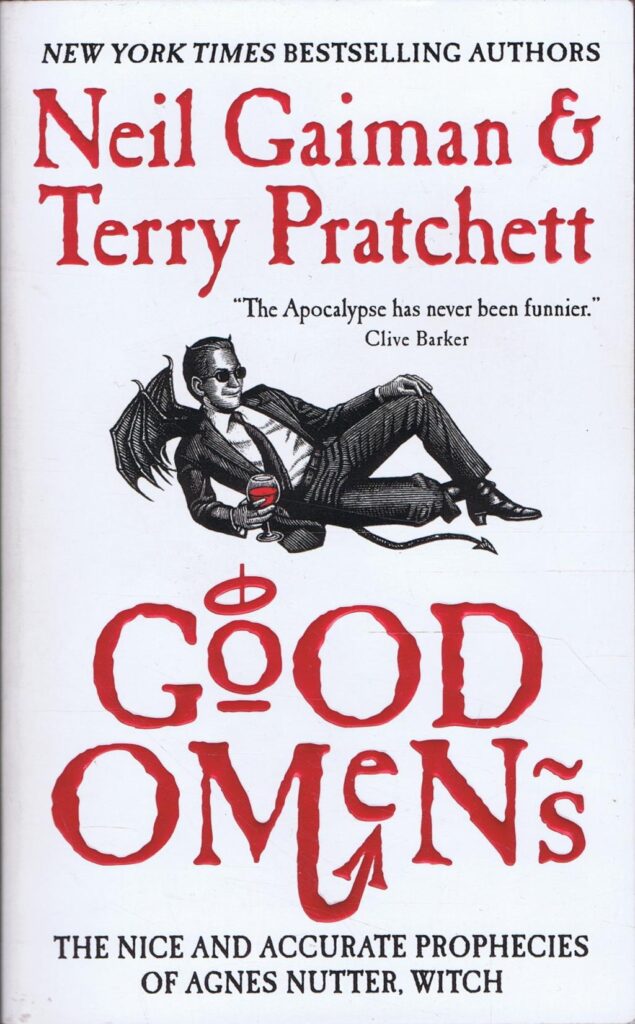
Probably the funniest book you’ll read about the end of the world. Good Omens was written in collaboration by two very highly respected authors who were both in the early days of their career at the time, but who managed to make a real classic nonetheless.
With the apocalypse looming on the horizon, a demon and an angel (Aziraphale and Crowley) who have formed an unlikely friendship decide that they’re not actually all that keen to see the world end, despite the fact that that’s the ultimate goal of the divine plan, so they take steps to try and postpone it. Both of them are very likeable characters and they’re just two of many. The whole book is filled with loveable characters. I was particularly fond of Agnes Nutter (a character you don’t see much of directly, but who is integral to the backstory) and her modern day descendant, Anathema Device. Both of them are witches with the ability to see into the future and I particularly liked Anathema’s attempts to prevent the apocalypse. On the flip side, I also found Newton Pulsifier (sole member of the Witchfinder Army) to be a very funny and endearing character in a ridiculous kind of way.
Something that’s particularly appealing about this book is that as much as it can occasionally be very silly and often deals with fantastical religious characters and themes, it somehow succeeds in remaining quite down to Earth throughout. The people in the novel are all very believable and they all respond to things in realistic ways. Then you also have things like Heaven and Hell, which seem to be run just like any other organisation i.e. with all the flaws you’ll find in a workplace. They succeed in making the extraordinary ordinary, while still keeping it very entertaining.
Something else that I really appreciated about this book, is that it wasn’t just silly for the sake of being silly – it always had something important to say and the authors just chose to do it in a more whimsical way. Really, this is quite a profound book, with lots to say about life, death, religion, human beings and much more. Yet, throughout the whole thing, there’s a great feeling of wholesomeness and the focus on friendship and the wonder of childhood can also be very heart warming.
Overall, the book is a delight and quite easy to read. I think it’s a book with a very broad appeal, but particularly to those with an interest in religions and the idea of the apocalypse.