One big reason MSN was better than Messenger

I love instant messaging. It’s brilliant. An excellent way to stay in touch with absent friends and a great way to casually chat with people without having to meet up with them in person – something which we kind of take for granted, but as a teenager using MSN for the first time, it felt incredible to be able to talk to my friends in real time online. Sure, we had texting before then, but texts cost 10p each. A conversation would soon become very expensive. MSN was a free text-based chat system which revolutionised social lives. Or, at very least, my social life. An appealing way to remain social if you were somebody who didn’t like going out so much.

Nowadays instant messaging is even better. Nearly everybody has a messaging app on their phone (usually Facebook Messenger) and with everybody connected to the internet at all times, we can now contact any friend at any time – isn’t that wonderful? Well, in some ways, it certainly is, but there was one big benefit to MSN which Facebook Messenger doesn’t provide – something which, if it was there, would probably help to reduce a lot of the anxiety that some people feel when using it.

So, what’s the feature? Well, if you remember, MSN would usually log in automatically when you went onto your computer. If you were planning to use your computer to do something else, you could just set yourself to “busy” or “do not disturb” so that people would know not to send you a message or, if they did, they’d know you wouldn’t reply to that message right away. It was a nice way to let people make some boundaries.

Facebook Messenger doesn’t have this option and it creates lots of problems. Firstly, it creates pressure for you when you use it – if you’re online, you know that it’s telling your friends that you’re online and then gives you cause to think that it might seem rude if you don’t respond immediately. Secondly, on the other side of things, if somebody messages somebody and they can see that they are currently online, it will make them question why they’ve not received a response if they don’t get one right away – they’ll wonder if they have annoyed or offended the person and then end up feeling all anxious.

So why doesn’t Facebook implement this feature which other services had over a decade ago? It only takes a second’s thought to realise that it will improve the user experience and the mental health of the people using it. The reason is that they don’t care about these things. They want you on the app as often as possible throughout the day and they don’t care about the toll it takes on you – if you’re on the app, you can be exposed to adverts that are there and they can make money from the data they accumulate from every conversation you have. I do often miss the days of the internet when everything wasn’t so hyper-commercialised…

Facebooktwitterredditpinterestlinkedinmail
Posted in The Internet, Thoughts | Leave a comment

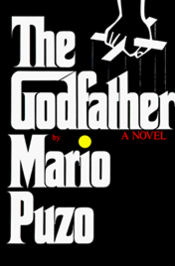
The Godfather by Mario Puzo

Throughout the years I’ve heard a lot of people talk about The Godfather as one of the greatest movies ever made. I’d never gotten around to seeing it and, interestingly, never really heard much praise for the book. Nonetheless, the book remained on my radar and was something I wanted to try for some time… then recently, I finally decided to read it and while I can’t comment on the film, I believe the book to be among the best ever written.

The novel focuses on the Corleones, a mafia family. Vito Corleone is the head of the family and the titular ‘godfather’ and I found him to be a fascinating character. He’s a deeply religious man who always stands by his principles, someone who believes that it’s important to carve deep and meaningful relationships with all of the people in your life, particularly those who you do business with. He’s such a compelling, likeable man that you find yourself looking past the fact that he is a mafia don and has therefore almost certainly been responsible for the unlawful killing of many people.

But the book does paint a very sympathetic picture of mafia morality. The mafia is very much family oriented and if the people who join aren’t related by blood or marriage, they’ll be people who have formed strong personal bonds with someone who’s already in the mafia. Largely, its members are Italian American immigrants and the book points out that a lot of time they were unable to count on the police or the legal systems of America, due to systematic racism. The cards were stacked against them, so their only option was to create their own law system – one which didn’t view them as second class citizens. Of course, it’s a very romanticised view of organised crime, but it makes for a terrific story and is very thought-provoking.

Vito has four children: Mike, Connie, Sonny and Frederico – plus a man named Tom who he took in and serves him as a counsellor. Mike isn’t too keen on the family business, while Sonny is endlessly loyal to his father, to the extent that he’ll do anything – he has a violent streak which concerns them all. Frederico is less hot-headed, but equally as loyal, while Connie, as a woman, is not included in the family affairs. Unfortunately, most of the women play more limited roles – I guess it accurate to the time period and sub-culture that women wouldn’t have been involved with the mafia work, but if I had the fault the book on anything, it’s less then great portrayal of its female characters. Some of the male characters don’t have great attitudes towards women either… but again, I think it’s better to accurately present misogyny than pretend it never happened. I did also quite like Michael’s partner Kay and Vito’s wife Carmela.

The book is fairly long, focusing on several story threads which concern the different characters, but I read through it so quickly, because I loved every page. You really feel the bonds between these men and become quite invested in their world and their ethos. I was reading it for at least an hour every day and often that was because I intentionally stopped myself to do something else, rather than because I wanted to stop. The writing style is beautiful and it’s a really addictive book. I love the characters, I love the setting and I love the subject matter – I’ve never really read anything about the mafia before, but it was amazing to get some kind of insight into the way it operates. I also just really enjoy stories set in 1940s New York, so that was an extra bonus for me.

I think I’d recommend this book to anyone. It’s one of those masterpieces which appeals even to people who don’t typically read the genre it belongs to. It’s not often that I come across a book as incredible as this and I’m glad I finally decided to read it.

Rating: 9.8/10

Buy it here.

Facebooktwitterredditpinterestlinkedinmail
Posted in Book Reviews | Leave a comment

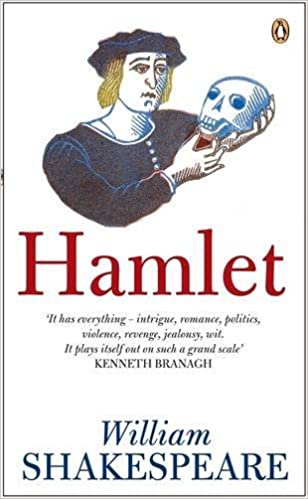
Hamlet by William Shakespeare

One of Shakespeare’s most famous plays – and for good reason. Prior to reading Hamlet, I would have happily said that Richard III was my favourite Shakespeare play, but now I’d say that Hamlet has just about edged it out. It’s full of wit, humour and a perfectly executed melodrama, which I can’t help but enjoy.

The story follows a young prince, Hamlet, who’s father, the king, suddenly dies. His mother then quickly marries his uncle, but the ghost of his father tells him that he was actually murdered by the uncle. Hamlet then puts it upon himself to expose the truth and avenge his father. A fairly standard Shakespearean plot, really.

What makes this play stand out so much, is Hamlet himself. He’s a brilliant character. At one point, he puts on a play for his uncle and mother, which is essentially about his uncle murdering his father. How incredibly passive aggressive – it’s such an absurd thing to happen, but I love it. Meanwhile, he wanders around making excessively long speeches about the turmoil of life which are really over-dramatic (including the most famous “to be or not to be?” speech) but, again, I love them. Hamlet is so spoilt and pretentious… but it makes him very entertaining to read about.

But, Hamlet himself isn’t the only attraction of this novel: I loved his shifty, untrustworthy friends, Rosencrantz and Guildenstern, and a woman he treats badly, named Ophelia. Even the ghost of his father is quite a likeable character. The rest of the cast are all great.

It’s quite a grizzly tale, on the whole, but a thoroughly enjoyable one. The absurd ways that the characters behave mean that you can never take the tragedies that befall them too seriously – yet the dramas that unfold remain deeply compelling. If you’re looking for a Shakespeare play to start with, I recommend this one and if you’ve enjoyed his other work, but not read this yet, I reckon you’ll love it!

Rating: 8.1/10

Buy it here.

Facebooktwitterredditpinterestlinkedinmail
Posted in Book Reviews | Leave a comment

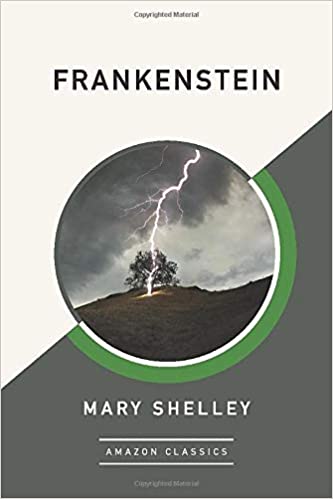
Frankenstein by Mary Shelley

This is one of those books which I had to read as part of my GCSEs. As a young teenager, the book felt overly wordy and my overall impression was that it was pretty inaccessible. Nonetheless, I did like the idea of Frankenstein – the idea of a sentient creature created by a human being is one I quite like. In fact, after reading and not enjoying the book at school, I watched and enjoyed several of the Frankenstein movies. Really, I was fascinated by the concept and so it’s only natural that I decided to read it again and reappraise it with adult eyes.

As it turns out, I’m really glad that I went back to this one. On my second reading, I loved every page and couldn’t get enough of it. It has an interesting framing device – it starts with a man named Robert Walton who plans to sail to the North Pole. During his journey, he encounters Victor Frankenstein who writes for him the story of his life – which is, of course, the story of how he created an intelligent living being. Within that, there’s a further story of another character’s perspective, but I won’t spoil it. I really enjoyed all three of the narratives and enjoyed how they all tied together.

What I particularly liked about this book was that every character was really interesting. Victor Frankenstein was a very believable character and not necessarily the most sympathetic of protagonists. Meanwhile, the creature is a fascinating character – at times I felt really sorry for him, at other times I thought his behaviour was unforgivable. It’s important to keep in mind that throughout the whole book, the creature is never more than a year old – surely not enough time for somebody to truly develop a proper sense of right and wrong. I also really liked the character of Elizabeth Lavenza, Victor’s fiancĂ©. A compassionate and caring character and one of the most likeable people in the novel – she certainly stands out among a sea of deeply flawed people.

Frankenstein is probably remembered as a horror story most often, but I don’t think that that is quite appropriate. I’d definitely call it a science fiction story and one which can be quite disturbing at times, but not in the same way that a horror would be – there’s much more to it than that and I think a lot of what makes this story so disturbing is that there are extreme emotional consequences for everything that happens. The characters are nuanced, the emotions run deep and the storyline is clever – for all these reasons and more, this is one of my favourite books.

Rating: 9.3/10

Buy it here.

Facebooktwitterredditpinterestlinkedinmail
Posted in Book Reviews | Leave a comment

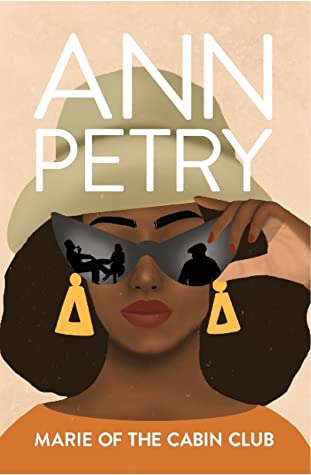
Marie of the Cabin Club by Ann Petry

This was one of several books released digitally as part of the Reclaim Her Name movement, which was created to celebrate the 25th anniversary of the Women’s Prize for Fiction. Each of these book was written by a woman who had to use a male pseudonym due to the sexism and prejudices of their time. Marie of the Cabin Club was originally credited to “Arnold Petri”, but now, for the first time, Ann Petry has been correctly attributed as the author.

As it happens, this particular addition to the collection is very much just a short story – you’ll easily finish it in one sitting. It’s about a woman named Marie who works as a “cigarette girl” in a cabin club – she falls in love with one of the musicians there and the two of them have a romance. However, there’s more to the musician than meets the eye. It’s set in the 1930s (when it was written) and this context is quite important. The story takes an interesting turn and it becomes a bit of a thriller – but it is very short and there isn’t all that much time left to properly explore the characters and ideas.

In one sense, it’s a very good short story: I liked everything I read and I wished that there was more to it… but, also, this meant that I was left thinking “oh, was that it?” which is perhaps a side effect of it being put forward as a standalone piece. Maybe I wouldn’t have thought that if it had been released as part of an anthology.

Either way, this is a short and sweet story. Enjoyable and intriguing while it lasts and because of the limited amount of time needed to finish it, I don’t think anybody could regret reading it.

Rating: 6.5/10

Facebooktwitterredditpinterestlinkedinmail
Posted in Book Reviews | Leave a comment

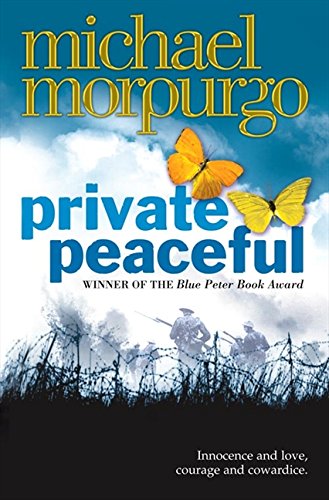
Private Peaceful by Michael Morpurgo

The First World War is one of the greatest tragedies of modern history. In Private Peaceful, Michael Morpurgo tells the story of two boys, Charlie and Tommo, who find themselves in the trenches of France – highlighting the meaningless suffering of war in a very poignant way.

Tommo, the younger of the two brothers, it the story’s narrator. He’s telling the story from France and looking back over his earlier memories to comfort himself. The tales of his early life are beautiful, he, Charlie, their mentally-disabled brother, Joe and their close friend Molly have all kinds of adventures in the small English village they grew up in. They’re all very poor and they face hardships living on the estate of a rich colonel. Their lives aren’t simple or easy, but there’s a certain beauty to it all – especially for the strong bonds that they all hold for one another. There’s also a partially formed love triangle between Tommo, Charlie and Molly, which was quite bittersweet. They were all brilliant characters.

Of course, the whole time you’re reading about those precious childhood memories, you have the knowledge in your mind that the pair of them will be shipped off to fight in the war before too long. As the narrator, Tommo alludes to something horrible happening right from the start. It gives a feeling of tension to everything – a feeling that you should cherish the good times, because you never know when they will come to a sudden end.

Once they finally ship out to war, things are about as bleak as you would imagine. The ending is particularly distressing – I’m not going to spoil anything, but I’ll just say that it left me feeling emotionally stunned. I think part of what makes everything feel so brutal is the fact that the characters are all so wholesome and likeable that you really don’t want them to have to go through these things.

Though this book was written for children, I feel that it’s just as appealing to adults. It’s a good way for kids to learn about the human reality of the First World War and it’s a good reminder, for adults, of an historic tragedy which must never be forgotten or repeated. I recommend it to everybody.

Rating: 9/10

Buy it here.

Facebooktwitterredditpinterestlinkedinmail
Posted in Book Reviews | Leave a comment

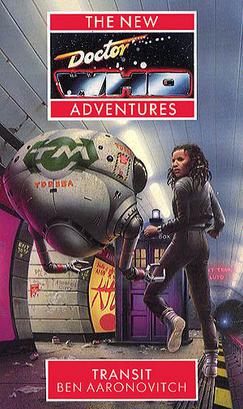
Doctor Who: Transit by Ben Aaronovitch

Virgin’s Doctor Who New Adventures have a reputation for being too dark and edgy. Transit, the tenth book in the series, is perhaps the most infamous for this reason. In fact, it is generally regarded as being quite bad because it goes too far in that direction, to the extent that it doesn’t quite feel like Doctor Who. I was very curious to read it for these reasons – I was also pretty excited to read the first novel with Bernice Summerfield officially in the position of the Doctor’s companions. She had been fantastic in her introduction in the previous book, Love and War.

Aside from an amusing little prologue, right after the first chapter, I had the feeling that this was very much not like Doctor Who as I know it. And why? Not because of adult themes (which I think Doctor Who is capable of addressing), but because the first (exceedingly long) chapter didn’t feature any recognisable elements from the Doctor Who Universe. It was all about a new character named Kadiatu – she lives in the 22nd century and has some money stolen from her. We learn about a complicated transmat system which allows people to take trains between different planets. There’s a lot of future slang and terminology and, frankly, I felt quite lost a lot of the time.

Eventually the Doctor and Benny arrive at the scene… unfortunately, they soon get separated and spend most of the novel apart, which is a shame, because I wanted to see some interaction between them. In fact, we don’t really get much of Benny at all, because she also spends a significant portion of the novel under an alien influence. She definitely felt very underutilised in the novel. I also really felt Ace’s absence, as she was such a big part of all the earlier novels.

What I did like, however, was getting to see the Doctor team up with Kadiatu. The two of them have a very interesting dynamic – Kadiatu is very different to any of his companions, quite a gritty character. The two of them spend a lot of time together in this novel and I enjoyed their interactions. Interestingly, Kadiatu is a descendant of The Brigadier and as such, stories of the Doctor have been passed down through her family. My inner fan did appreciate this reference.

Overall, though, this book is a mess. It has nice parts to it, but mostly I didn’t enjoy it because I didn’t really understand what was going on. Yes, there’s adult grittiness in the form of sex and violence, but these weren’t even problems, in my opinion. The problems stem from the fact that the storyline is a very confusing one and it’s made all the more confusing by lots of made up future slang terms. It’s something about an entity invading the transit system and causing problems – I couldn’t really keep up. Sadly, it was one of my least favourite Doctor Who novels so far – which is a shame, because I know Ben Aaronovitch, author of Remembrance of the Daleks, can do much better.

Rating: 4.9/10

Facebooktwitterredditpinterestlinkedinmail
Posted in Book Reviews, Doctor Who | Leave a comment

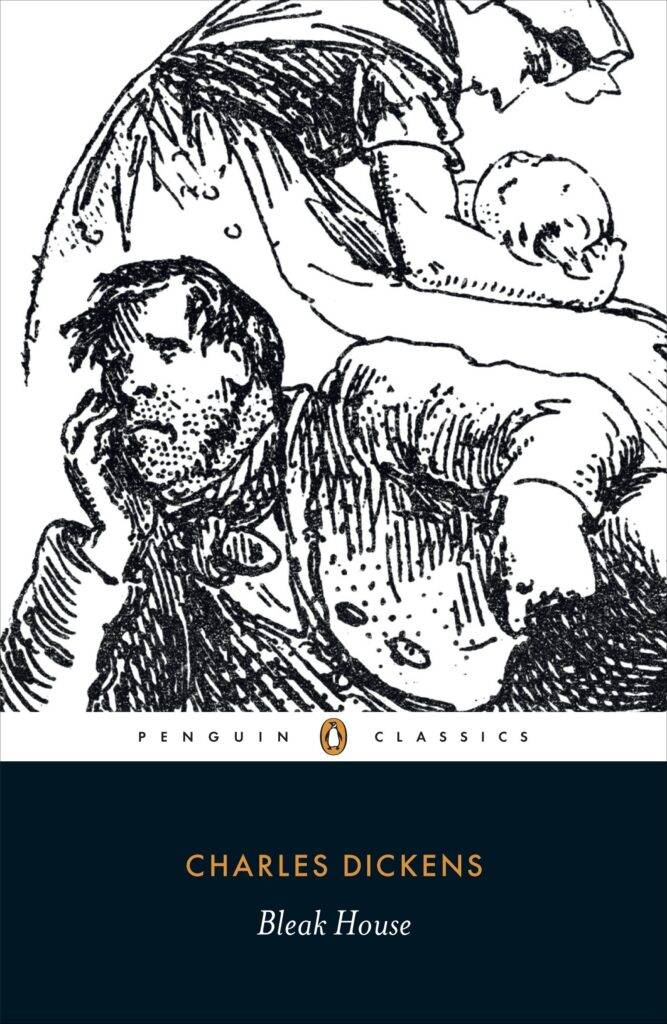
Bleak House by Charles Dickens

This is one of the Charles Dickens books which is, perhaps, not quite so well remembered. I don’t think it’s entered popular culture quite as much as A Christmas Carol or Oliver Twist, for example – I certainly went into it without even the slightest notion of what the book might be about.

As it happens, it’s a storyline which can’t be summarised very easily. At it’s heart, it’s about a lawsuit which has been going on for years about a disputed will. It’s also about a young woman named Esther Summerson, who comes from a poor background and has been raised by a neglectful aunt. John Jarndyce, who is at the heart of the ongoing case, ends up as her guardian and her life changes significantly (and for the better). This portion of the story is told in the first person from Esther’s perspective – this was probably my favourite thread of the story, as I quite liked Esther’s ‘voice’. Meanwhile, another thread of the story concerns Sir and Lady Dedlock, a rich couple hoping for a payout from the ongoing court case. The chapters about the Dedlock family are told from a third-person perspective. If I’m completely honest, I found it quite complicated and difficult to keep track of all of these aspects of the story – particularly as I don’t know anything about the nineteenth century English legal system! There were definitely a few times throughout the book where I felt quite lost as to what was actually going on.

The summary I’ve given there is also a huge simplification. There are loads of characters, who all have their own storylines as well. There’s Ada, who works alongside Esther, becoming her friend and Richard, who Ada has a romance with and who has various career difficulties of his own. There’s also the bizarre man, Harold Skimpole, who is perpetually in debt, because he spends recklessly and has to borrow from people all the time – in his own words, he has the mind of a child, so cannot be held responsible. There’s Mrs. Jellyby, who dedicates her whole life to charity work (thinking it virtuous), but who is pretty toxic towards the people in her own life. Plus, there’s a homeless boy called Jo, who is essentially used by different characters to their own ends and has quite an unfortunate life. This is just a handful of the most memorable characters, but there are tonnes more of them.

On the positive side of things, I enjoyed Dickens’ usual sense of humour. There are lots of ridiculous characters who are there to send up the government or courts and they made me laugh a few times. There’s also his characteristic critique of the poverty in the country, which was good to see. As it all started to come together and I was finally able to start making some sense of it, I was pleasantly surprised by some of the twists and plot developments. There are definitely some good ideas in this book, wrapped up in funny one-liners and comedic names for the characters. Also, at one point someone randomly dies from spontaneous human combustion – crazy. You never know what’s going to happen next.

On the downside, the book is really long with each individual chapter taking me a very long time to read. A product of the time, the book is very wordy, which certainly doesn’t help when the plot is already extremely complex. Sometimes I’d start a chapter and it would take me quite a while to figure out what was happening – especially with it switching between one first person narrative and another third person narrative. It took me quite some time to realise how these two thing were connected. With so many characters, it also became hard to remember who was who and what everybody was doing at any given point.

So, sadly, this isn’t a book I can recommend. I do like Dickens and have a lot of respect for the things that he stood for, but overall, it was a very complicated one to process and one which ties in heavily to its historic context, making it less appealing to the modern readers. If you want to give Charles Dickens a try, this isn’t the book to read.

Rating: 5.2/10

Buy it here.

Facebooktwitterredditpinterestlinkedinmail
Posted in Book Reviews | Leave a comment

Expanding My Reading Horizons

My Trusty Book Reviews Instagram account is coming along very well and growing nicely. More people are now being exposed to my book reviews who otherwise wouldn’t have done – and that’s wonderful. I like to try and read quite widely, but I know I am guilty of primarily reading the classics and while there are a lot of “classics” out there, I’ve decided it’s time to try and broaden my horizons.

So what do I mean by that? Well, for one thing, I’m finding tonnes of new recommendations on Instagram, many of which I’m excited to read. I’m always looking for new reading recommendations and at this point, I’m sure my book list has over 1,000 books on it. I hope I managed to squeeze them all into my life time! But I’m trying other avenues too – I’ve always believed that some of the best pieces of literature ever written may be lying unread and unpublished in a writer’s bedroom. With the number of writers in the world and the number of books which will have been written and not published, it’s undoubtable that there are some real hidden diamonds out there and I’ve made two attempts so far to try and hunt for those diamonds.

First of all, I’ve gone to Fanfiction.net, a website I’ve used myself occasionally to publish short stories. I know fanfiction is generally looked down upon, but I think there’s a snobbishness in that. People don’t just post short stories there – it’s also home to lots of independent novels, some of them exceedingly long. I’ve been looking through the website in order to find the shining stars of the fanfiction world, which I’m sure will shine as bright as those in the rest of the world. So I’m quite excited about that, especially as it will give me a chance to revisit beloved characters and settings in new and unexpected ways.

I’ve also registered as a book reviewer with a service which sends the you the PDFs of newly published novels from independent, unknown authors. I’ve already been sent an enormous number of these and I’m not sure I’ll ever have a chance to read all of them… but I’m delighted to have this new source of books. Who knows, I might just find a new favourite there?

So at the moment I’m very enthusiastic about this decision to broaden my horizons. I may also give WattPad a chance, as I know a lot of authors use that to get started. In fact, back in my university days, I used to read and leave feedback on a fair few WattPad pieces. There’s just so much to read and so little time! Speaking of which, since the pandemic began I’ve been reading a lot more and have quite a list of book reviews I still need to write – I’ll probably have another week or a book review every day again soon (and maybe one for video games too). I hope you’ll enjoy my book content in future!

Facebooktwitterredditpinterestlinkedinmail
Posted in Blogging | Leave a comment

SteamWorld Dig

This was an interesting looking game which I’d seen in the 3DS eshop and been curious about for some time. Recently, I finally got around to playing it and I have to say, it was quite a beautiful and enjoyable experience.

You play as a robot named Rusty who inherits a mine from his uncle in a Wild West sort of town. Then, with a trusty pick axe in hand, it’s your job to dig deeper into the mine to find out what mysteries and treasures it contains. As you collect more and more valuable gems from the mine, you make more money and then use this to buy more upgrades so that you can go even deeper. Rusty, for example, carries a lantern to light up the dark caves, but, of course, the oil slowly starts to run out and you can buy lantern upgrades so that you can continue to mine for longer periods of time. The deeper you get, the harder the rocks are too, so you need to get stronger pick axes to break through them – you’ll also encounter enemy robots down there and you’ll need upgrades so that you can effectively fight back against them.

The formula for the game is one that’s very addictive. There’s something almost therapeutic about digging a path through the rock – it’s a little like a 2D Minecraft in that respect, except that it has more direction that Minecraft – your goal is simply to keep digging down deeper and deeper. Plus, as addictive as the gameplay is, that’s only half of the appeal. I think what made me enjoy this game even more was the fact that it had such a beautiful atmosphere. The game has a superb soundtrack which is complimented by immersive, ambient sound effects. It all contributes to making you really feel the thrill of digging deep into the earth – and the things you find there won’t disappoint.

I mentioned the 3DS eshop, but that’s just one of many places that this game is available to download. It’s always pretty cheap (and is often on sale too), so if you ever come across it, I heavily recommend it to you.

Rating: 8.7/10

Facebooktwitterredditpinterestlinkedinmail
Posted in Video Games | Leave a comment